
Breast augmentation perfectly tailored for an active lifestyle
The breasts are supported by the chest wall by round ligament tissue. This is a technique devised by the renowned American Dr. Hammond that enlarges the breasts by naturally inserting breast implants into that ligament tissue.
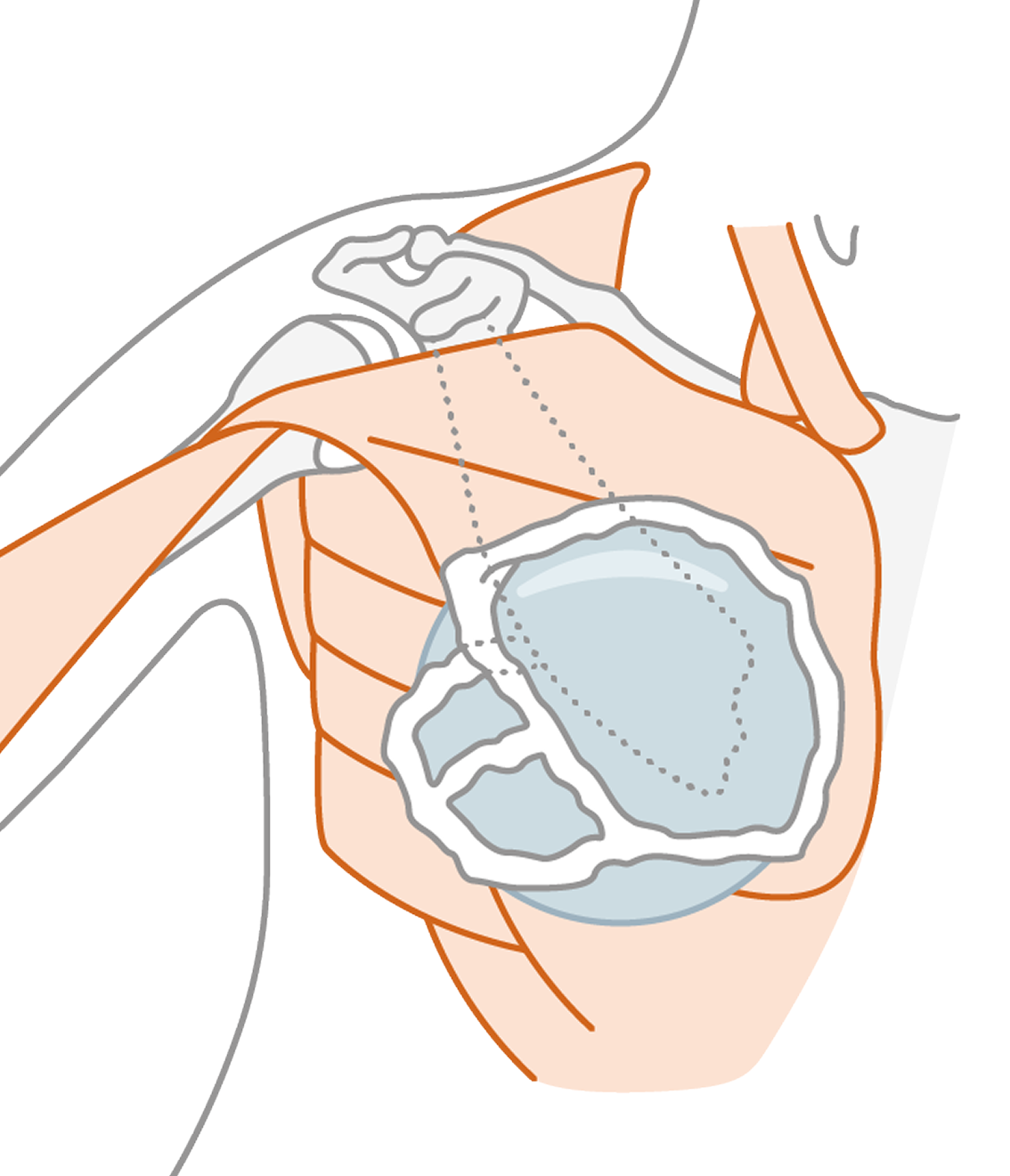
The implant is delicately inserted beneath the mammary tissue or into the partial subfascia space without damaging the pectoralis major muscle at all.
The entire process is performed under general anesthesia and does not involve touching the muscles, making it particularly suitable for women with an active lifestyle who enjoy exercise.
This method is designed to insert the implant into the ligament structure, minimizing bottom-out and ensuring the implant sits in a structurally stable position. However, due to individual variations in the size of the ligament space, the insertable implant volume may be limited to approximately 250cc. (This varies depending on the thickness of the rib cage and tissues.)
In particular, it has the advantage of high shape stability because it secures space by finely dissecting only the necessary range along a very thin and hard layer called the ‘Partial Subfascia’ rather than a simple submandibular layer.
This surgical method is a realistic and efficient option for those who are hesitant about general anesthesia or desire breast augmentation that allows for a quick return to daily life.
Because it is inserted into the ligaments surrounding the breast, the likelihood of bottoming out after surgery is very low.
Since there is no damage to the pectoralis major muscle, there are no restrictions on exercises that involve significant upper body movement after surgery.
With a design that minimizes tissue dissection and provides precise support, the shape remains consistently uniform even with minimal use of a compression bra after surgery.
Since the implant is not inserted beneath the pectoralis major muscle, animation deformity does not occur.


Tissue-preserving breast augmentation features a smaller dissection area and minimizes tissue damage, resulting in less burden and faster recovery.
The time required to return to your usual exercise routine, such as running, weight training, or yoga, is short.

It is well-suited for those who seek natural lines that harmonize with their body shape rather than excessive volume. It is particularly satisfying for those who desire a soft volume of around 250cc or prefer a "feeling like my own breasts."


It is especially suitable for those who find it difficult to take a long vacation due to the short recovery period. You can return to your daily routine, including work and childcare, with a quick recovery.

This is suitable for those who find general anesthesia burdensome and prefer a lighter and more comfortable sedation anesthesia. It involves less surgical stress and allows for faster recovery on the same day.
The selection of implants is customized based on body type, chest width, skin thickness, desired volume, and tactile preference.
* Only Motiva is supported for third-party systems
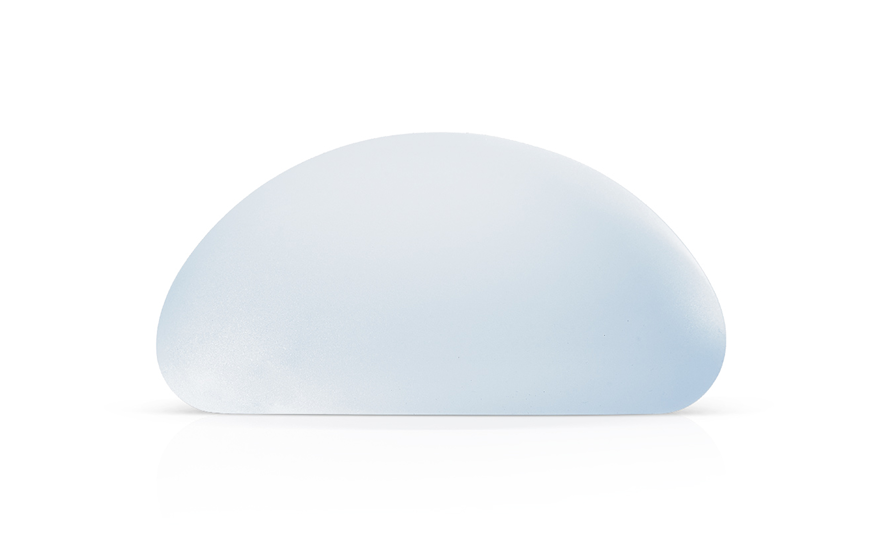


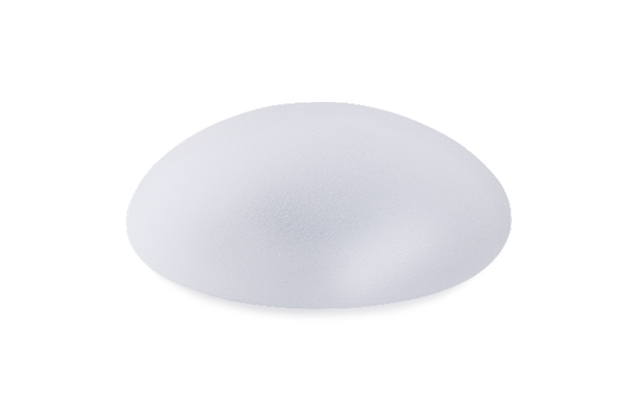
The surgery is performed by encapsulating the implant within the ligaments surrounding the chest.
This method is designed to allow the implant to blend naturally with the body's anatomical structure.
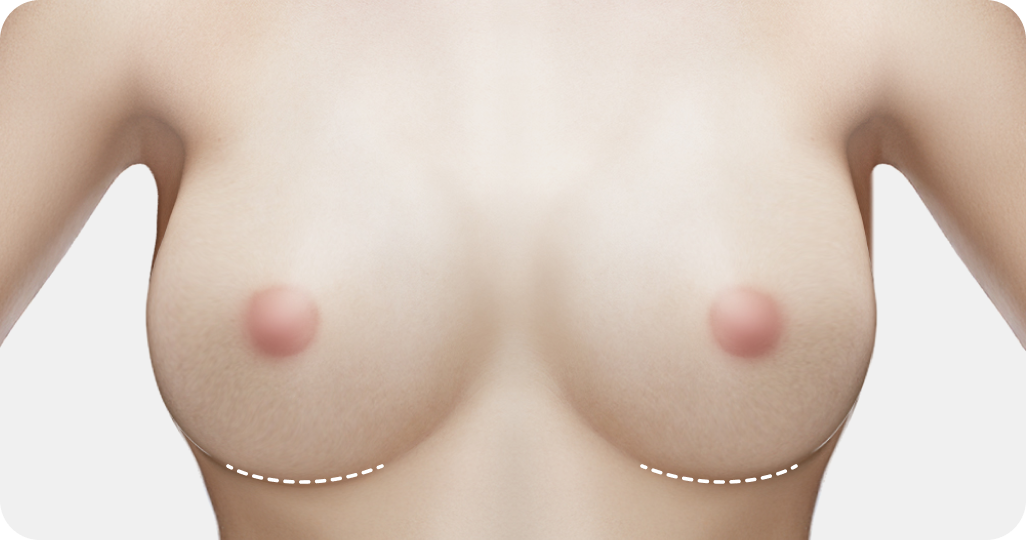
We proceed with the design considering chest width, curves, and nipple position.
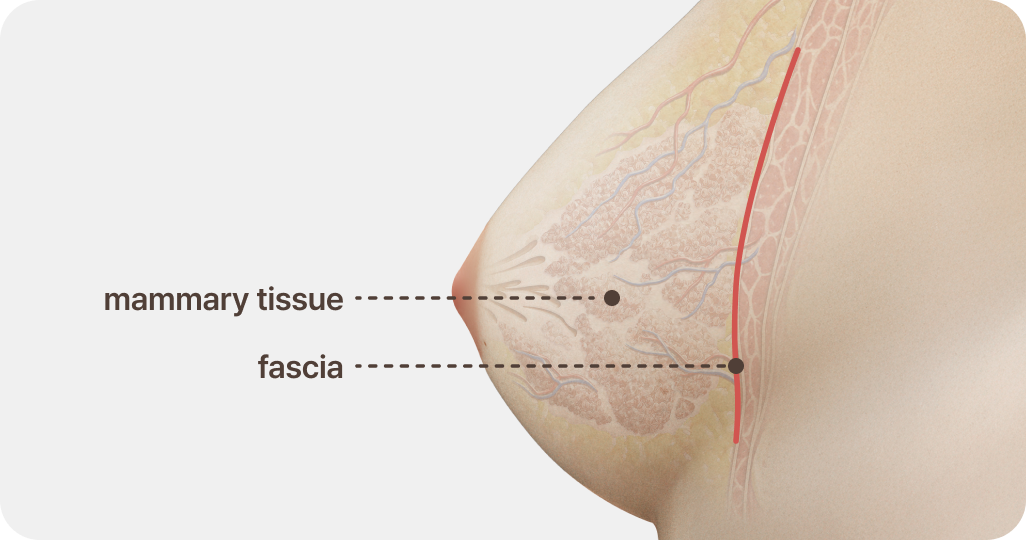
Delicately dissect only the necessary area beneath the mammary tissue or into the partial subfascia.
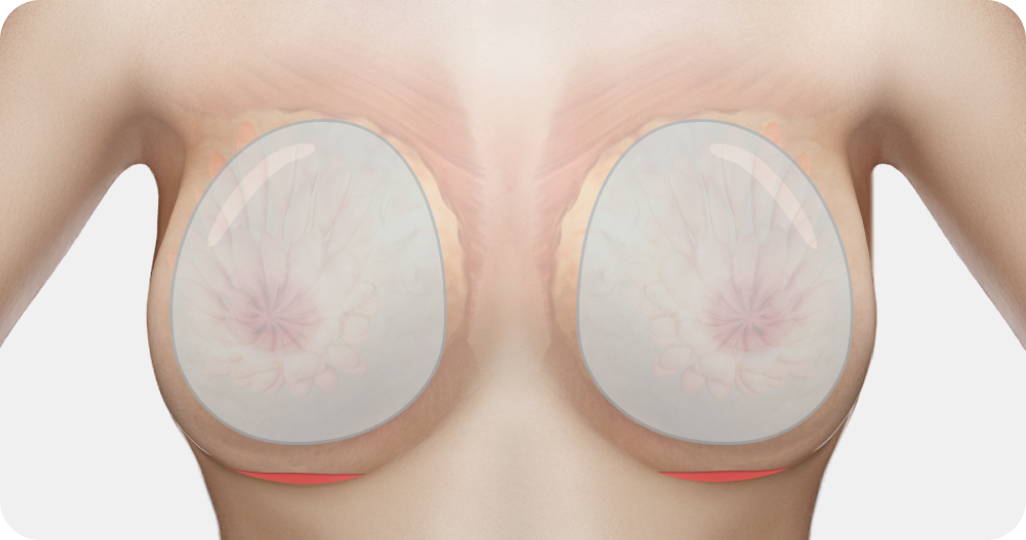
The implant is inserted so that it settles stably into the ligaments surrounding the chest.
Yes. Since it does not damage the pectoralis major muscle, there is no animation deformity of the implant during upper body exercises.
Tissue-preserving breast augmentation is the method most optimized for natural volume (usually around 250cc, though it may increase depending on the rib cage) because implants are inserted into the surrounding ligament tissue. It is particularly well-suited for those who desire a "natural look like their own body" rather than large volume.
Various implants such as Motiva, Mentor Extra, and Mentor Boost are available, and the most natural and stable combination is selected by analyzing body type, skin thickness, and chest width.
No. Tissue-sparing breast augmentation is performed only through an inframammary fold incision.